

In manufacturing marketing, credibility is currency. Buyers are analytical, risk-averse, and often answering to multiple stakeholders before making a decision. That’s exactly why case studies remain one of the most valuable pieces of content in a manufacturer’s marketing toolkit.
Case Studies Turn Complex Manufacturing Solutions into Clear Stories
More than just success stories, well-crafted case studies translate complex solutions into real-world results. They show how your expertise, process, and problem-solving skills create measurable impact.
Manufacturing products and services are rarely simple. Technical specs, long sales cycles, and custom solutions can make it difficult to communicate value quickly. Case studies solve this by framing complexity within a relatable narrative:
- A challenge your audience recognizes
- A process they can trust
- An outcome they want to achieve
By grounding technical capabilities in real applications, case studies help buyers understand exactly what you do and why your product or service works.
They Build Trust in High-Stakes Buying Decisions
Manufacturing buyers don’t make impulse purchases. They look for proof.
Social Proof That Speaks to Engineers and Executives Alike
A strong case study validates your claims through:
- Real customer challenges
- Documented solutions
- Tangible results
This kind of content supports sales teams, reassures procurement, and gives decision-makers confidence they’re choosing a proven partner.
Case Studies Support SEO and Long-Term Content Strategy
From an SEO standpoint, case studies perform well because they mirror how manufacturing buyers actually search. They’re built around real challenges, real applications, and real outcomes, making the language naturally specific and intent-driven.
Case Studies Strengthen SEO Through Relevance and Intent
Well-written case studies tend to include:
- Industry-specific keywords tied to actual use cases
- Product and service terminology used in context, not isolation
- Geographic, vertical, or application-based relevance that supports long-tail search visibility
Because the content is grounded in real scenarios, it avoids forced keyword placement. Instead, it signals credibility and relevance to search engines while answering the kinds of detailed questions buyers are already asking during the research phase.
Over time, a library of case studies can help strengthen topical authority, improve organic discoverability, and support a broader content ecosystem without relying on constant new content creation.
Evergreen Content with Multiple Uses
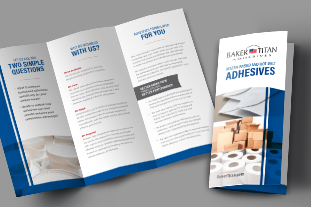
One case study can be repurposed across:
- Website pages
- Sales presentations
- Email campaigns
- Social media
- Trade show materials
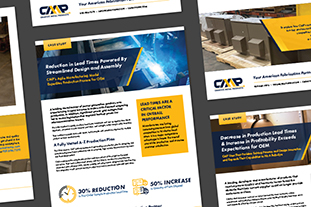
With thoughtful structure and strong visual design, a single story can fuel months of content without feeling repetitive.
Design Matters as Much as the Story

Even the most compelling results can get lost if the presentation falls flat.
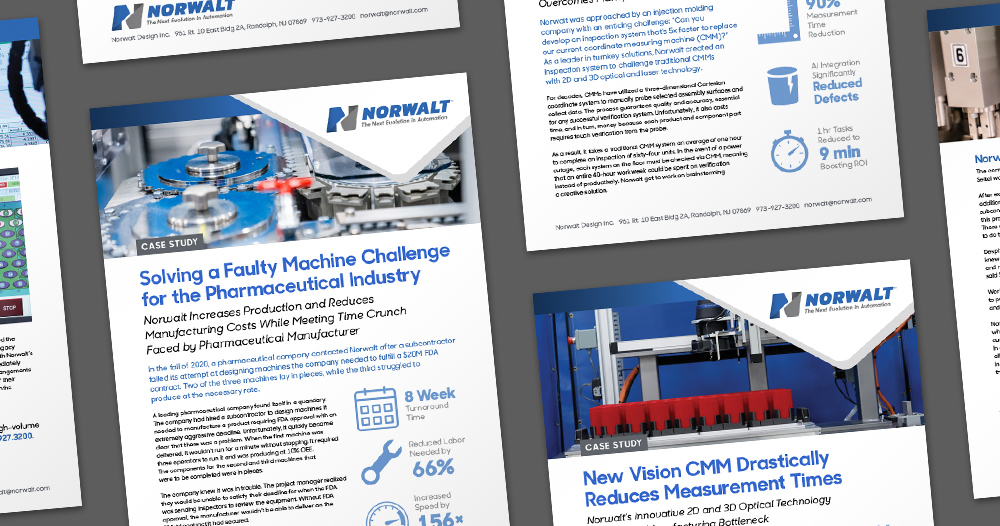
Manufacturing audiences expect clarity, professionalism, and credibility. Strategic creative design helps:
- Break down information visually
- Highlight key data points
- Guide readers through the story logically
- Clean layouts, purposeful typography, diagrams, and data visualization elevate case studies from “nice to have” to genuinely persuasive assets.
As digital research becomes the norm, buyers are forming opinions long before they speak to sales.
Case studies meet them where they are, offering proof and clarity at exactly the right moment.